Osaka Street Food: A Guide to the Best Local Eats
This site contains affiliate links. I may earn a small commission, at no extra cost to you.
When I think about Osaka, one of the first things that comes to mind is its incredible food culture. The city has earned a reputation as one of Japan’s best destinations for food lovers, and I quickly found that some of the most memorable dishes can be enjoyed casually from small stalls, market counters, and neighborhood shops.
Osaka street food gives me an easy way to experience the city while exploring its busiest neighborhoods. From steaming takoyaki and savory okonomiyaki to crispy kushikatsu, there is always something tempting to try. What I particularly enjoy is that I don’t need to plan an elaborate restaurant itinerary—I can walk, look for a busy vendor, and try something that catches my attention.
In this guide, I’ll share the Osaka street foods I recommend trying, where I would look for them, how much I would expect to spend, and a few simple tips that can make a food crawl much easier.
Must-Try Osaka Street Foods
If it’s your first time exploring Osaka’s food scene, I recommend starting with a few dishes that are closely associated with the city.
Takoyaki
Takoyaki is probably the first Osaka street food I would tell anyone to try. These small, round batter balls are cooked with pieces of octopus inside and are usually topped with takoyaki sauce, mayonnaise, bonito flakes, and green onions.
They are served piping hot, so I always give them a little time to cool before taking a bite. The combination of the soft, almost creamy center and flavorful toppings makes them especially satisfying while walking around the city.
Consider takoyaki an essential stop on any Osaka food crawl because it is easy to share and leaves enough room to try several other dishes.
Okonomiyaki
Okonomiyaki is another Osaka favorite that I wouldn’t skip. It is a savory pancake made with ingredients such as cabbage, batter, meat or seafood, and various toppings.
Although okonomiyaki is often associated with restaurants rather than traditional street stalls, I still think it belongs on an Osaka food itinerary. I like it because each serving feels hearty enough to work as a proper meal rather than just a snack.
If you’re already exploring Dotonbori, set aside time to stop for okonomiyaki instead of trying to eat everything while walking.
Kushikatsu
When I visit Shinsekai, kushikatsu is one of the foods I look for. These skewered ingredients are coated in breadcrumbs and deep-fried until crisp. You can find versions made with vegetables, meat, seafood, and other ingredients.
The contrast between the crunchy coating and tender filling makes kushikatsu especially enjoyable after a few hours of sightseeing.
One thing to keep in mind is the traditional sauce etiquette. At many kushikatsu establishments, communal sauce is not meant to be double-dipped, so follow the posted instructions and use the serving method provided by the restaurant.
Negiyaki
If I want something similar to okonomiyaki but with a stronger green-onion flavor, I would try negiyaki. It is made with plenty of chopped green onions and tends to have a lighter texture than traditional okonomiyaki.
It is a great choice if you want to try something Osaka-style without ordering another particularly heavy dish.
Taiyaki
For something sweet, I like looking for taiyaki. These fish-shaped cakes are traditionally filled with sweet red bean paste, although modern vendors may offer fillings such as custard, chocolate, or sweet potato.
They are easy to carry while exploring, making them a convenient dessert between sightseeing stops.
Where I Would Go for Osaka Street Food
Osaka has plenty of food neighborhoods, but I would focus on a few areas that make it easy to combine eating with sightseeing.
Dotonbori
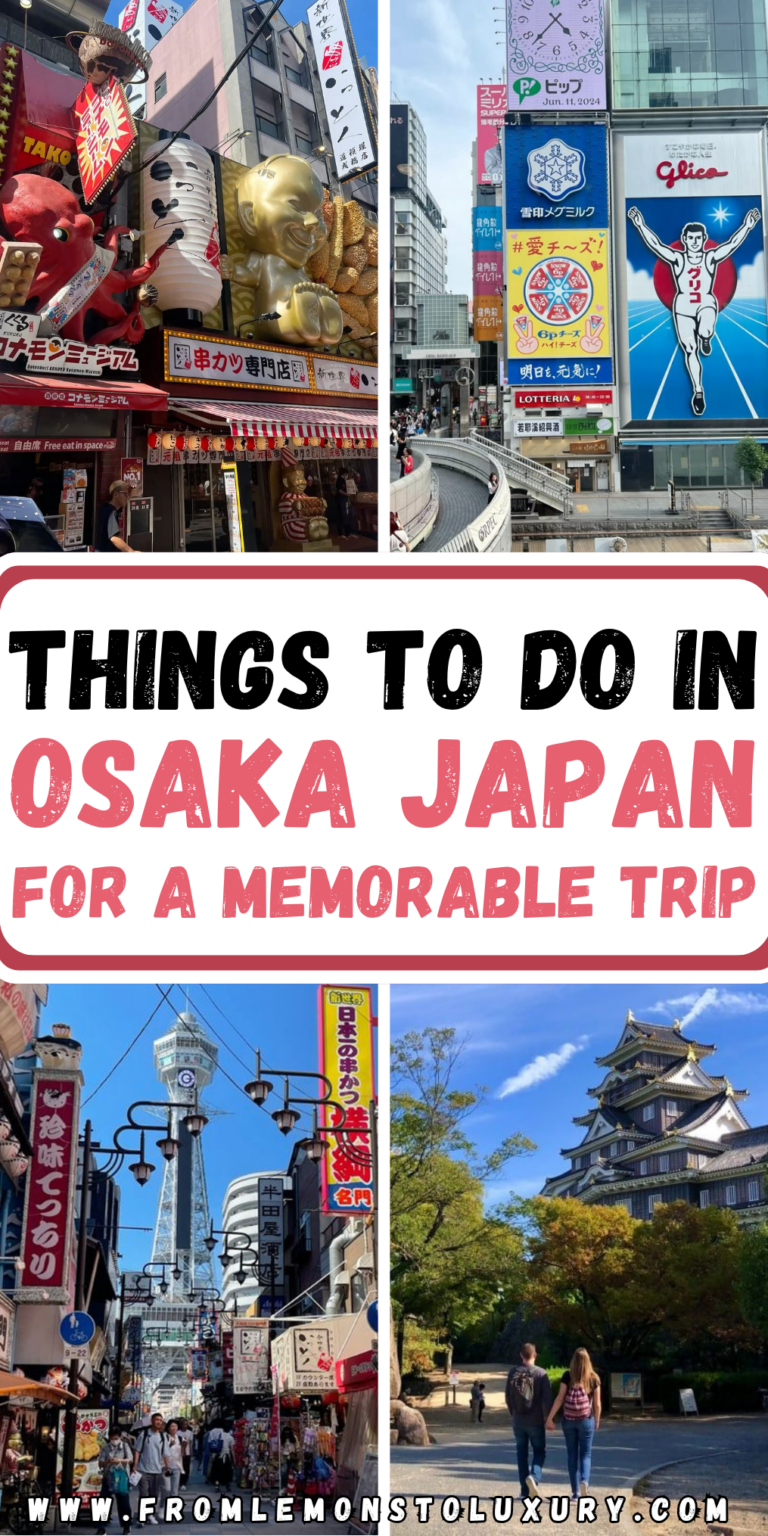
Dotonbori is the first place I would recommend for a visitor who wants to experience Osaka’s lively food scene. The area is packed with restaurants, food stalls, snack shops, and eye-catching signs.
I especially enjoy walking along the Dotonbori Canal and browsing the food options rather than choosing the first place I see. Takoyaki is an obvious choice here, but I would also look for other snacks so I can sample several flavors.
Because Dotonbori can become extremely busy, try visiting outside the busiest meal periods when possible. It makes stopping at food vendors and navigating the streets much easier.
Shinsekai
For a different atmosphere, I would head to Shinsekai. This neighborhood is particularly associated with kushikatsu and has a nostalgic, old-school Osaka character.
I like combining a Shinsekai food stop with sightseeing around the area. Rather than treating the visit as a quick meal, take some time to walk around, compare menus, and enjoy the neighborhood atmosphere.
Kuromon Market
Kuromon Market is another useful stop for food lovers. Instead of focusing on only one signature dish, I would use the market to sample different seafood, grilled foods, fruit, sweets, and other Japanese specialties.
The biggest advantage for me is variety. I can buy smaller portions from different vendors instead of committing to one large meal.
Keep in mind that market prices can vary considerably depending on the ingredients and vendor, particularly for seafood.
A Simple Osaka Street Food Crawl
If I only had one day to focus on Osaka food, I would avoid trying to visit every food district. Instead, I would organize my route around a few neighborhoods.
Start in Kuromon Market: I would arrive earlier in the day and sample a few lighter foods while exploring the market.
Move toward central Osaka: After eating, I would spend a few hours sightseeing rather than continuing to snack immediately. This gives me time to work up an appetite again.
Visit Dotonbori: Later in the day, I would explore Dotonbori and try takoyaki or another small snack.
Finish in Shinsekai: I would end my food crawl with kushikatsu and take some time to explore the neighborhood before heading back.
This approach works better for me than eating large portions at every stop. Osaka has so many tempting foods that leaving some room for the next dish is part of the experience.
Typical Prices to Expect
One of the things I appreciate about Osaka street food is that I can sample local specialties without spending as much as I might at a full-service restaurant.
Prices vary by vendor, portion size, ingredients, and location, so I treat them as general guidelines rather than fixed costs.
| Food | Approximate Price |
|---|---|
| Takoyaki | ¥500–¥1,000 |
| Taiyaki | ¥200–¥400 |
| Kushikatsu | ¥100–¥300+ per skewer |
| Okonomiyaki | ¥800–¥1,500+ |
| Market seafood/snacks | ¥500–¥2,000+ |
For a casual food crawl, I would budget around ¥2,000–¥4,000 per person if I want to sample several inexpensive foods without having a full restaurant meal at every stop.
Osaka Street Food Etiquette
I find that a few simple habits make eating around Osaka much more comfortable.
- Check whether the vendor provides a designated eating area before starting your food.
- Avoid blocking busy sidewalks while eating or taking photos.
- Follow signs about where eating and drinking are allowed.
- Dispose of trash in the bins provided or carry it if none are available.
- Avoid touching food unnecessarily when choosing items.
- At kushikatsu restaurants, follow the establishment’s specific sauce and dining rules.
- Keep my voice at a reasonable level, especially in crowded indoor spaces.
The easiest rule is simply to watch what local customers are doing and follow the vendor’s instructions.
Tips for Planning an Osaka Food Crawl
I’ve found that a little planning makes a big difference when exploring Osaka’s food scene.
Don’t Eat Too Much at the First Stop
This is probably my most important tip. When I see a great takoyaki stand, it can be tempting to order a large portion immediately. But if I do that everywhere, I quickly run out of room. I prefer smaller portions when possible so I can try more dishes.
Carry Cash
While many places accept cashless payments, I still like carrying some Japanese yen when visiting smaller vendors and markets. Payment methods can vary, and having cash gives me more flexibility.
Visit Popular Areas at Different Times
Dotonbori and other famous food districts can become crowded, particularly around popular meal times. If my schedule allows, I visit earlier or later than the main rush.
Check the Food Before Ordering
When I see a dish I haven’t tried before, I like to look at the ingredients or ask what is included. This is particularly helpful if I have dietary restrictions or simply don’t know what a Japanese dish contains.
Leave Time for Exploring
I don’t treat Osaka street food as a race. Some of my favorite moments come from wandering into a smaller street, discovering an interesting shop, and taking a break between major attractions.
What Makes Osaka Street Food Special?
For me, the best part of Osaka street food isn’t just the individual dishes. It’s the way food fits naturally into the experience of exploring the city.
You can have takoyaki while walking around Dotonbori, stop for kushikatsu in Shinsekai, browse the stalls at Kuromon Market, and finish with something sweet. Each neighborhood offers a slightly different atmosphere, so the food becomes part of the sightseeing experience rather than something separate from it.
Appreciate the variety. Build an entire day around small bites, or combine a few street-food snacks with a sit-down meal when you want something more substantial.
Hotel Recommendations
- Hotel Forza Osaka Namba Dotonbori — A convenient choice if your main goal is to explore Osaka’s street food, with Dotonbori right nearby. Expedia also lists it among the highly rated hotels near Kuromon Market.
- Citadines Namba Osaka — A good option if you want more space and convenient access to Namba and Kuromon Market.
- Cross Hotel Osaka — This is a strong mid-range option in the Dotonbori/Shinsaibashi area, making it easy to combine sightseeing, shopping, and food stops.
- Hiyori Hotel Osaka Shinsekai — Consider this one if kushikatsu and the retro atmosphere of Shinsekai are priorities.
- KOKO HOTEL Osaka Shinsekai — A practical choice for travelers who want to stay close to Shinsekai while keeping accommodation costs lower.
For this particular street-food itinerary, my top pick would be Hotel Forza Osaka Namba Dotonbori because staying around Namba makes it easier to reach several of the food areas featured in your article. Namba is also a convenient base for transportation and evening dining.
Final Thoughts
Exploring Osaka street food is one of the easiest ways I know to get a taste of the city’s lively personality. I would start with the classics—takoyaki, okonomiyaki, and kushikatsu—then leave room for smaller discoveries such as taiyaki, negiyaki, and market snacks.
If you’re planning your own Osaka food adventure, I recommend focusing on Dotonbori, Shinsekai, and Kuromon Market rather than trying to cover the entire city in one day. Take your time, order smaller portions when possible, follow local dining etiquette, and give yourself plenty of time to wander.
For me, that’s what makes an Osaka food crawl memorable: the combination of iconic local dishes, energetic neighborhoods, and the little food discoveries I make along the way.
Osaka Trip Essentials
Before I start exploring Osaka’s food streets, I like to prepare a few essentials so I can spend more time enjoying the city and less time worrying about logistics. I recommend having a Suica or ICOCA card for convenient train and subway rides, comfortable walking shoes for exploring areas like Dotonbori, Shinsekai, and Kuromon Market, and some Japanese yen for smaller food vendors and shops that may not accept cards.
I also keep a portable power bank with me since I use my phone frequently for maps, translations, and taking photos. For a food-focused trip, I plan my days around a few main neighborhoods rather than trying to visit everything at once, and I leave plenty of room for spontaneous food stops along the way. Checking opening hours before visiting popular markets and restaurants is also helpful, as individual vendors may have different schedules.